When Saving One Life Risks Redefining Another
Modern medicine can now preserve organs that could save multiple lives—but should the desire to save others ever influence how we treat someone who is dying? Having recently faced end-of-life decisions for my own wife, I find myself asking whether the greatest ethical challenge isn't transplantation itself, but remembering that every donor is first a patient, never merely a source of organs.
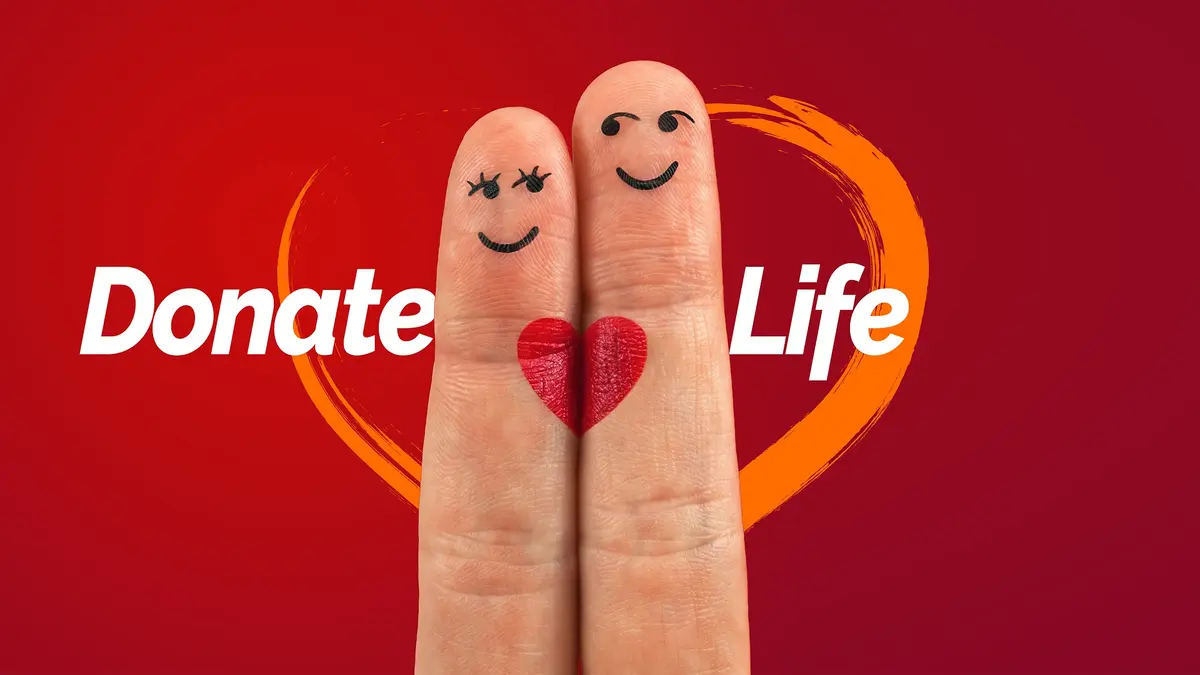
Modern medicine has accomplished something remarkable.
A single organ donor can transform several lives. A failing heart begins beating again. Kidneys free someone from years of dialysis. A liver gives a child the chance to grow into adulthood. Few medical achievements demonstrate human compassion more vividly than organ transplantation.
Yet every great medical breakthrough eventually confronts a difficult question:
Just because we can do something, does it follow that we should?
That question has become increasingly urgent as medicine explores ways of recovering organs before irreversible deterioration occurs. Better-quality organs mean better outcomes for recipients. The logic is compelling.
The ethics are not.
Recently I read an article discussing the debate surrounding what some critics call "death by organ donation." The issue is not whether organ donation itself is good. Rather, it asks whether the pursuit of healthier organs might slowly shift medicine's focus away from the dying patient and toward those waiting for transplants.
The overwhelming majority of organ donations today occur after brain death or following carefully established protocols. In many cases, the patient cannot personally confirm their wishes. Families or substitute decision-makers must speak on their behalf, trying to honor values expressed long before the final illness.
That responsibility is enormous.
I know this not as a philosopher, but as someone who lost his wife only last week after a long battle with cancer.
The physicians and nurses who cared for her were compassionate and professional until her final moments. I remain grateful for everything they did.
Yet during those difficult days, another experience left a lasting impression.
While I remained almost continuously at the hospital, someone repeatedly called our home telephone regarding organ donation. I understand why. Time is critical. Every hour can determine whether organs remain suitable for transplantation.
Still, from the perspective of a grieving family, those calls felt profoundly unsettling.
Not because anyone intended harm.
But because grief has its own rhythm, while medicine has its own timetable.
Those two clocks rarely move together.
After watching my wife endure years of surgeries, chemotherapy, uncertainty, and pain, my instinct was simple:
She had suffered enough.
Whether or not organ donation would have been medically possible was almost beside the point. Emotionally, I could not escape the feeling that the person I loved deserved complete peace—not one more procedure, one more intervention, or one more decision made because others might benefit.
Many families undoubtedly reach a different conclusion, and I respect that deeply. Countless transplant recipients are alive today because another family displayed extraordinary generosity during their darkest hour.
This is not an argument against organ donation.
It is an argument for remembering the order of our moral obligations.
The dying patient must never become secondary to those who hope to receive an organ.
Medicine's first duty has always been to care for the individual entrusted to it. If that priority ever changes—even for compassionate reasons—we cross a line that deserves careful examination.
Some ethicists argue that explicit consent should allow a person to donate organs before traditional definitions of death, if doing so would save more lives.
Perhaps.
But laws are rarely shaped only by the best intentions. They must also anticipate the worst incentives.
If society ever concludes that a living person's death can be intentionally hastened because others would benefit more, the ethical foundation shifts dramatically. Patients may begin wondering whether every treatment decision serves them—or serves a larger calculation.
Trust, once weakened, is extraordinarily difficult to restore.
Religious traditions often frame this concern differently.
Rather than viewing human beings primarily through the lens of utility, they see each person as possessing inherent dignity that does not diminish because they are dying, unconscious, or medically beyond recovery. From that perspective, death is not simply a biological event to be managed efficiently but the final chapter of a human life deserving reverence and care.
One need not share a particular faith to appreciate the underlying principle.
A person's value does not increase because they can save five others.
Nor does it decrease because they cannot.
Medicine rightly celebrates every successful transplant.
It should also remember that every donated organ comes from someone whose story has ended.
That story deserves to end with the same compassion, respect, and dignity that medicine seeks to give to those whose lives it hopes to save.
"The measure of a compassionate society is not only how many lives it can save, but also how faithfully it honors the dignity of those whose lives are coming to an end."
Sources:
1. 'Can We Kill You for Your Organs, Please' - by Mary Marslender in The Wall street Journal dated July 21, 2026
2. 'Death by organ donation' - by SHARON KIRKEY in The Daily Press dated 25th July, 2026
Leave a Comment
Comments