When Hollywood Becomes the World's Largest Reading Club
The greatest advertising campaign for classical literature may not come from schools or universities—it may come from Hollywood. Time and again, blockbuster films have sent millions of people back to libraries and bookstores, proving that entertainment can become the gateway to lifelong learning.
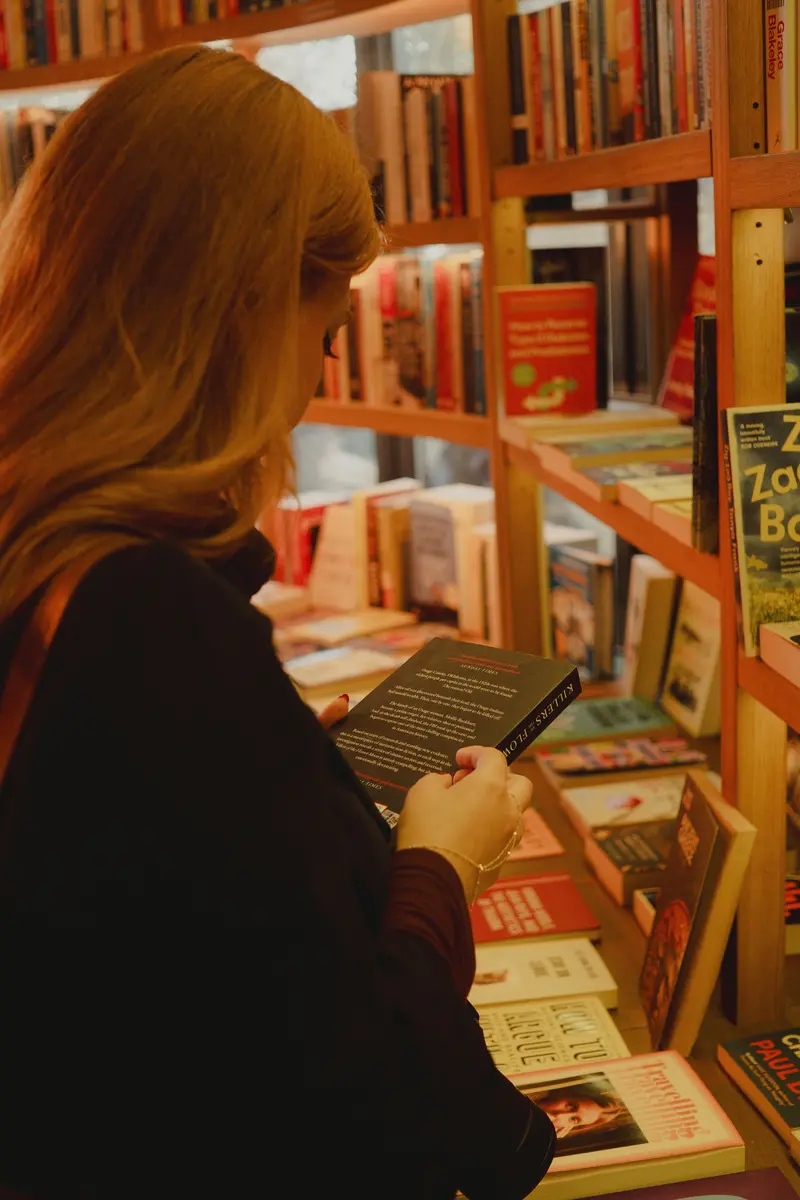
There is an old joke that the fastest way to make a classic book popular is to turn it into a blockbuster movie.
Like many jokes, there is more truth in it than we often realize.
A recent Wall Street Journal article described how thousands of readers are picking up fresh English translations of Homer's The Odyssey before the release of Christopher Nolan's adaptation. Many of these readers had once encountered the epic in school, often sitting through literature classes wondering why they should care about a 3,000-year-old poem.
Now they cannot wait to read it.
What changed?
Not the book.
Not the poem.
Only the story's arrival on the big screen.
Cinema Creates Curiosity
Schools have long struggled to convince students that the classics are worth reading.
Films accomplish something entirely different.
Instead of beginning with analysis, they begin with emotion.
A compelling trailer, an acclaimed director, spectacular visuals, and the promise of an unforgettable story awaken curiosity before the first page is ever turned.
Suddenly, readers want to know what really happened.
Did the movie stay faithful to the original?
Which scenes were omitted?
Which characters were changed?
The book stops feeling like homework and starts becoming an adventure.
Sometimes We Only Understand a Classic Years Later
As I read about today's renewed interest in The Odyssey, I found myself thinking back to my own university days.
Before I was admitted to Mechanical Engineering, I enrolled in a Mathematics program as a temporary path while waiting for my preferred course. Like many science students, I also attended English literature classes.
One lecture that has stayed with me—though I scarcely appreciated it at the time—was on Alfred, Lord Tennyson's Ulysses.
It is important to make a distinction here.
Tennyson's Ulysses is not Homer's The Odyssey. Homer's work is the original ancient Greek epic poem recounting Odysseus's long journey home after the Trojan War. Tennyson, writing more than two thousand years later, imagined the same hero in old age, no longer content with a quiet life after his adventures.
At the time, I confess I sat through the lecture only half listening. My thoughts were occupied by a far more immediate concern: whether I would be accepted into Mechanical Engineering. The poem seemed distant from the future I was trying to build.
Only many years later did I discover what I had overlooked.
Near the end of the poem, Tennyson gives Ulysses words that have become some of the most enduring in English literature:
"To strive, to seek, to find, and not to yield."
Those few words have inspired explorers, scientists, entrepreneurs, educators, and ordinary people for generations. Ironically, I probably understand that single line far better today than I ever could as a young undergraduate worrying about entrance requirements and examinations.
Perhaps that is the fate of many classics. We encounter them when we are too young or too distracted to appreciate them. Then life itself becomes the teacher, and years later we return to the same pages with entirely different eyes.
I Saw It Happen with Ponniyin Selvan
The same phenomenon unfolded in Tamil Nadu before the release of Ponniyin Selvan.
For decades, Kalki Krishnamurthy's monumental five-volume historical novel had been admired by devoted readers but remained intimidating to many others.
Then came the film adaptation.
Libraries reported long waiting lists.
Bookstores displayed fresh editions.
Readers who had never considered tackling five volumes suddenly found the motivation to do so.
Some wanted to compare the movie with the novel.
Others wanted to understand the historical background.
Many simply wished to join the conversations taking place among friends and across social media.
Whatever their reason, people were reading.
That, surely, is something worth celebrating.
Long Before Social Media
This phenomenon did not begin with Instagram, X, or Facebook.
When Gladiator captivated audiences in 2000, interest in Ancient Rome surged. Readers bought books about Roman emperors, military campaigns, and everyday Roman life. Museums featuring Roman artifacts experienced renewed public attention.
A similar revival followed The Last Emperor.
The film introduced millions to the final years of China's Qing Dynasty and the extraordinary life of Puyi. Viewers who knew little about imperial China sought books to better understand the political upheavals that transformed one of the world's oldest civilizations.
In both cases, cinema became the first chapter of a much longer educational journey.
Social Media Changed the Motivation
Today's audience has an additional incentive.
Nobody wants to be left behind in the global conversation.
When a major film is released, discussions erupt instantly across social media.
People post reviews.
Debate historical accuracy.
Share favourite quotations.
Compare scenes with the original text.
This creates what might be called social curiosity.
Some readers undoubtedly skim summaries merely to sound informed online.
But many discover something unexpected.
They enjoy reading.
The initial motivation may be social, yet the intellectual reward becomes deeply personal.
Stories Come Before Textbooks
Throughout history, human beings have learned through stories.
Long before there were schools, civilizations passed knowledge from one generation to the next through epic poems, legends, and oral traditions.
Perhaps Hollywood has simply rediscovered this ancient truth.
A two-hour film cannot replace a five-hundred-page book.
Nor should it.
Its purpose is different.
A film opens the door.
A book invites us inside.
Entertainment as an Educational Partner
Academics sometimes worry that cinema oversimplifies history.
It certainly can.
Movies compress timelines, invent dialogue, and occasionally sacrifice accuracy for dramatic effect.
Yet perhaps we judge them too harshly.
Without the film, many viewers might never have become interested in the subject at all.
Every reader who walks into a library because of a movie represents a small victory for education.
The gateway may have been entertainment, but the destination is knowledge.
The World's Largest Reading Club
Publishers have known this for decades.
Whenever a successful adaptation is announced, sales of the original work often soar.
Libraries order additional copies.
Book clubs rediscover forgotten classics.
Teachers seize the opportunity to introduce students to literature while public interest is at its peak.
Perhaps Hollywood is doing something few institutions can accomplish on its own.
It reminds millions of people that behind every great movie lies an even older story waiting patiently on a bookshelf.
The greatest reading club in the world may not meet in libraries.
It gathers quietly in cinema queues.
And every time the lights dim, another reader may be born.
Final Thought
For centuries, books have inspired films. Today, films are returning the favour by inspiring readers. If even one blockbuster persuades someone to dust off Homer, Kalki, Shakespeare, or another timeless author, then cinema has done more than entertain—it has kept civilization's greatest stories alive for another generation.
Sources:
1. Finally Reading Odyssey - by ESTHER ZUCKERMAN AND CONNOR HART in The Wall Street Journal dated 18th Jul 2026
Leave a Comment
Comments