When Power Speaks Softly: From Papal Silence to Political Spectacle
From wartime silence to modern political spectacle, the relationship between moral authority and power has always been uneasy—shaped as much by what is said as by what is left unsaid.
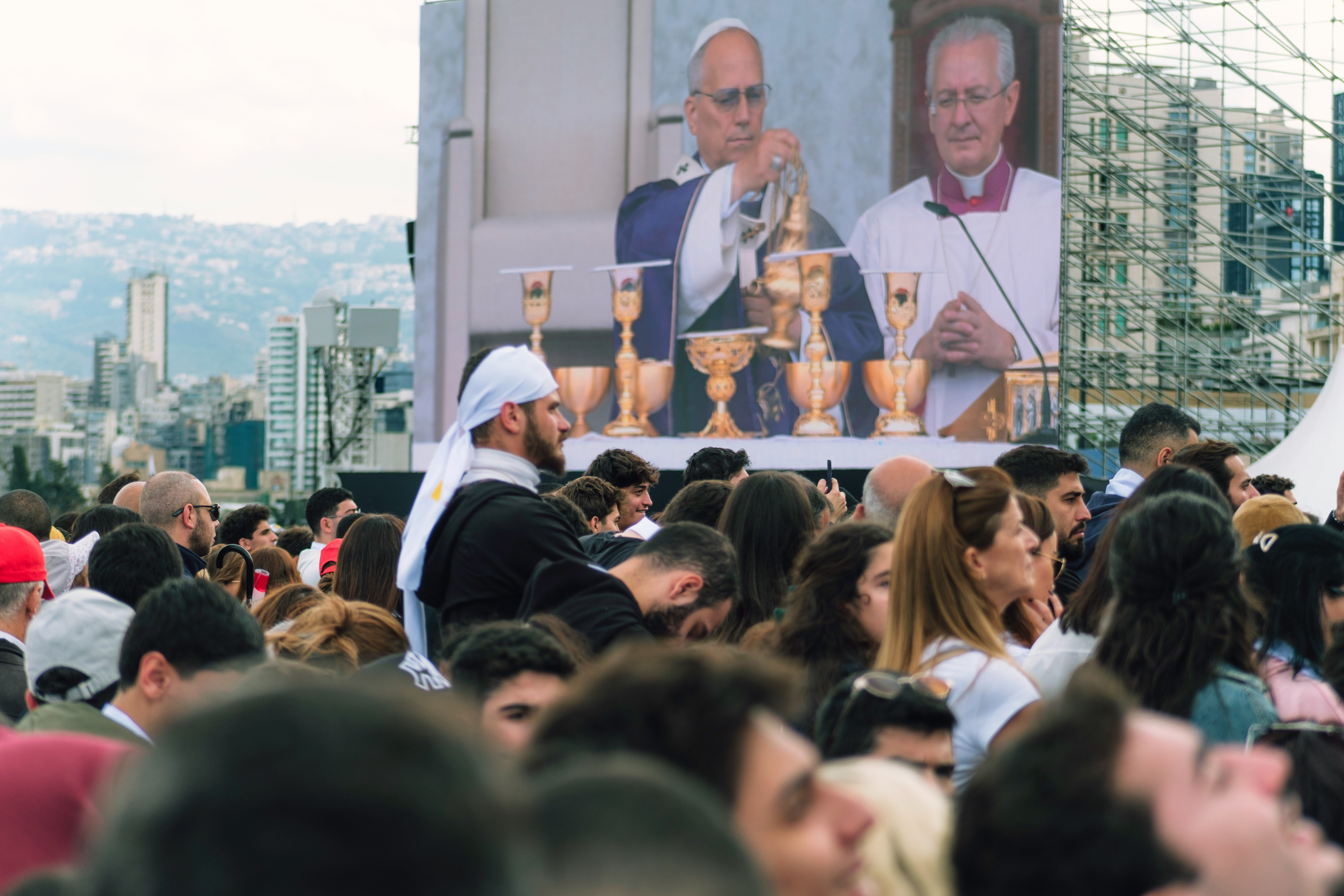
The recent clash between Donald Trump and Pope Leo XIV might seem like just another moment in a long line of political disagreements.
A religious leader raises moral concerns.
A political leader responds sharply.
Public reaction follows.
But the response to a now-deleted image—one that portrayed Trump in a Christ-like role—revealed something more subtle. The discomfort did not come only from critics, but from supporters as well.
It was less about politics, and more about boundaries.
And that is where this moment begins to connect with a much longer history.
A history of careful words
The Catholic Church has, at various points, chosen restraint in the face of profound moral crises.
During World War II, Pope Pius XII spoke of those “marked down for death,” yet avoided explicitly naming Nazi Germany or the Jewish people.
For some, this reflected prudence:
- a concern for protecting lives under authoritarian regimes
- an effort to maintain diplomatic channels
For others, it raised harder questions:
- whether neutrality can obscure responsibility
- whether moral clarity sometimes requires risk
The debate has never fully settled.
Framing responsibility
When Pope Benedict XVI visited Auschwitz, he described a “ring of criminals” who led Germany into darkness.
The framing was careful. It acknowledged wrongdoing without extending blame too broadly.
Yet critics wondered whether such language narrowed accountability too much—whether it separated leaders from the societies that enabled them.
It is a difficult balance:
- recognizing coercion and fear
- without overlooking participation and silence
Acknowledgment in the modern era
In Canada, Pope Francis addressed the legacy of residential schools, apologizing for the actions of “many Christians.”
The apology carried weight. It marked recognition of real suffering.
At the same time, it reflected a familiar pattern:
- distinguishing individual wrongdoing from institutional responsibility
For some, this distinction allows for reconciliation.
For others, it leaves unresolved questions about accountability at the highest levels.
A different kind of misstep
Against this backdrop, the recent political episode feels different—not because it is more serious, but because it moves in the opposite direction.
Where past Church responses have often been cautious and measured, this moment was immediate and symbolic.
The use of religious imagery in a political context did not invite interpretation as much as it prompted unease.
Not outrage alone—something quieter:
- a sense that certain lines, while unwritten, still exist
The shared challenge of authority
What connects these moments is not equivalence, but tension.
Religious institutions and political leaders operate under different expectations, yet both face the same underlying question:
👉 How should authority speak when moral meaning is at stake?
- Speak too carefully, and the message may feel incomplete
- Speak too boldly, and it may feel misplaced
Neither path is without consequence.
A more measured reflection
It is easy to judge these moments in isolation—one as silence, another as excess.
But taken together, they suggest something more enduring:
- that moral authority is rarely absolute
- that leadership often involves navigating uncertainty
- and that history tends to revisit these choices with sharper clarity than the present allows
Closing thought
The recent backlash was not simply about a post or a disagreement.
It was a reminder that even in an age of constant expression, restraint still carries meaning—and that how power chooses to express itself continues to shape how it is understood.
Source: The Wall Street Journal, Dated 14 Apr 2026