Faith, Identity, and Belonging: Is My Head Scarf ‘As American as Apple Pie’?
A personal reflection on faith, identity, and belonging—revisiting a 2009 perspective in today’s more polarized world, and asking whether outward identity brings us closer together or further apart.
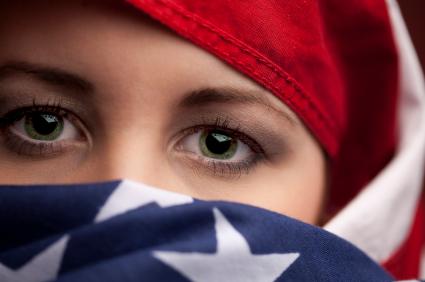
There was a time when I deliberately avoided writing about religion.
Not because I had nothing to say—but because I wasn’t sure where reflection ended and controversy began.
That changed in 2009.
Back then, I came across an article in Newsweek about identity and belonging—what it means to be seen as “American,” and who gets to decide that. What stayed with me wasn’t just the message, but the tone. It felt less like a statement of identity and more like a case being made for acceptance.
And that stayed with me.
So I wrote about it.
Looking back now, I realize I wasn’t reacting to the article alone. I was wrestling with a bigger question—one that still hasn’t gone away:
Does the way we express our identity bring us closer together… or quietly pull us apart?
What I Thought Then
I’ve never claimed to be deeply knowledgeable about religion—even my own.
I was raised with structure: rules about how to dress, when to pray, how to behave. Like most things we inherit early in life, I followed them without questioning their purpose.
But over time, that changed.
I began to wonder whether some of these outward expressions—what we wear, how we present ourselves—were essential to faith, or simply habits we had come to defend.
At one point, I wrote something I still remember clearly: that these visible markers of identity can feel like layers between us and everyone else.
Not walls. But not exactly bridges either.
To me, faith felt too personal to need display. If it’s real, why should it need to be explained—or worse, defended?
That was my thinking then.
What I See Differently Now
Time has a way of humbling certainty.
I still believe faith is deeply personal. The most meaningful parts of it—at least for me—have nothing to do with appearance, ritual, or public expression. They happen quietly, without an audience.
But here’s what I understand better now:
For many people, visible identity is not about separation. It’s about being seen without having to explain yourself. It’s about history, belonging, and sometimes even resilience.
What I once saw as unnecessary… might, for someone else, be essential.
And dismissing that too quickly is its own kind of blindness.
The World Didn’t Stay the Same
What’s changed even more than my perspective is the environment around it.
Conversations about identity are no longer subtle. They’re louder, sharper, and often more confrontational. We’re seeing stronger expressions of belief, culture, and belonging everywhere—from campuses to public spaces.
Sometimes it feels like empowerment.
Sometimes it feels like pressure.
And sometimes, if we’re being honest, it feels like lines are being drawn—whether intentionally or not.
That’s the uncomfortable part.
Because once identity becomes something that must constantly be asserted, defended, or recognized, it stops being just personal.
It becomes… positional.
Where I Stand Now
I haven’t abandoned my earlier thoughts—but I don’t hold them as rigidly either.
I still feel that when identity becomes something we lead with in every interaction, it can create distance. Not always. Not for everyone. But often enough to notice.
At the same time, I’ve come to accept that people express identity for reasons that aren’t always visible on the surface—and not always meant for others to understand.
So maybe the real question isn’t whether these expressions are right or wrong.
Maybe it’s this:
At what point does identity stop being a bridge—and start becoming a boundary?
An Open Thought
I don’t have a definitive answer.
I only know this much:
Faith, if it means anything, doesn’t need validation.
It doesn’t need to be performed.
And it doesn’t need to win arguments.
At its strongest, it simply exists—quietly shaping how we live, not how we appear.
Everything else… might just be noise.