Hollywood Isn’t Ending — It’s Drifting Away
Hollywood isn’t collapsing in flames—it’s quietly dissolving. As streaming giants, global production hubs, and AI reshape the economics of entertainment, Los Angeles is losing its grip on an industry it once defined. What replaces it may be more efficient—but also less human.
There’s something almost poetic—maybe even cruel—about what’s happening to Hollywood right now.
For over a century, Hollywood wasn’t just a place. It was the place. A gravitational center where talent, money, ambition, and storytelling all collided to create something bigger than the sum of its parts. The kind of place that, once it reached critical mass, became impossible to replicate elsewhere.
And now? That gravity is weakening.
The most telling moment came quietly at the 2026 Academy Awards. Not one of the ten Best Picture nominees was filmed in Los Angeles. Not one. The stories may still carry the Hollywood label, but the work—the real economic engine behind it—has already moved on to places like Atlanta, London, and Budapest.
That’s not just symbolic. That’s structural decay.
The New Power Centers
If you want to understand the shift, look at who’s really in charge now. It’s no longer the old studio bosses sitting behind polished desks on Sunset Boulevard.
It’s people like Ted Sarandos, who don’t just distribute content—they engineer it.
Platforms like Netflix have something Hollywood never had: data at terrifying scale. They know what you watch, what you skip, what you replay, and even when you lose interest. That’s not storytelling—it’s behavioral science.
And once one player proved the model works, the floodgates opened. Amazon Prime Video, Apple TV+, Hulu, and others followed, each building their own algorithmic engines.
Now compare that to the old-school model: a group of writers in a café, brainstorming ideas based on instinct, experience, and maybe a handful of recent hits.
Romantic? Absolutely.
Competitive? Not even close.
The Cluster Is Cracking
There’s a concept from Michael Porter that explains why this matters so much: industry clusters.
When the best talent and companies gather in one place, they create a feedback loop—ideas spread faster, partnerships form naturally, and innovation accelerates. Hollywood was one of the most powerful clusters ever built, right up there with Silicon Valley or Detroit in its prime.
But clusters don’t die dramatically. They erode.
First, production moves because it’s cheaper elsewhere. Then talent follows the work. Then the informal networks—the chance meetings, the mentorships, the “let’s grab coffee and figure this out”—start disappearing.
And once those “everyday collisions” vanish, the magic goes with them.
Los Angeles isn’t just losing jobs. It’s losing density—and that’s far harder to rebuild.
The Cost Problem Nobody Can Ignore
Let’s be honest here—Hollywood didn’t get blindsided entirely. It got expensive. Painfully expensive.
Cities like Atlanta offer tax incentives. Places like Vancouver benefit from favorable currency exchange. International locations bring both cost advantages and fresh backdrops.
From a business standpoint, the decision is almost boringly obvious: why spend more to produce in Los Angeles when you can get the same—or better—results elsewhere?
From a human standpoint, though, it’s messy.
Crew members now have to choose between long stretches away from home or turning down work altogether. That’s not just a logistical issue—it’s a lifestyle disruption. And over time, those decisions reshape the workforce itself.
And Then Comes AI
Just when Hollywood thought it was dealing with streaming and globalization, a new variable entered the equation: artificial intelligence.
This one cuts deeper.
Hollywood always believed its creative core made it untouchable. You can outsource production, sure—but storytelling? That was sacred ground.
Not anymore.
AI doesn’t just assist creativity—it challenges the idea of who (or what) gets to create. And if combined with the data-driven precision of streaming platforms, it creates a system that’s not just efficient, but predictive.
That’s a dangerous combination for an industry built on human intuition.
The Bittersweet Reality
Here’s the uncomfortable truth: from a consumer perspective, this is fantastic.
More content. Lower costs. Better personalization. Global stories that don’t need Hollywood’s approval to exist.
What’s not to like?
But zoom out, and it feels different.
Hollywood wasn’t just an industry—it was a cultural export machine. It shaped language, fashion, values, even aspirations across the globe in a way few industries ever have. From Seoul to São Paulo, its influence was everywhere.
And now, that centralized cultural force is fragmenting.
Maybe that’s progress. Maybe it’s overdue. But it’s also the end of something uniquely powerful.
So… Is This the End?
Not quite.
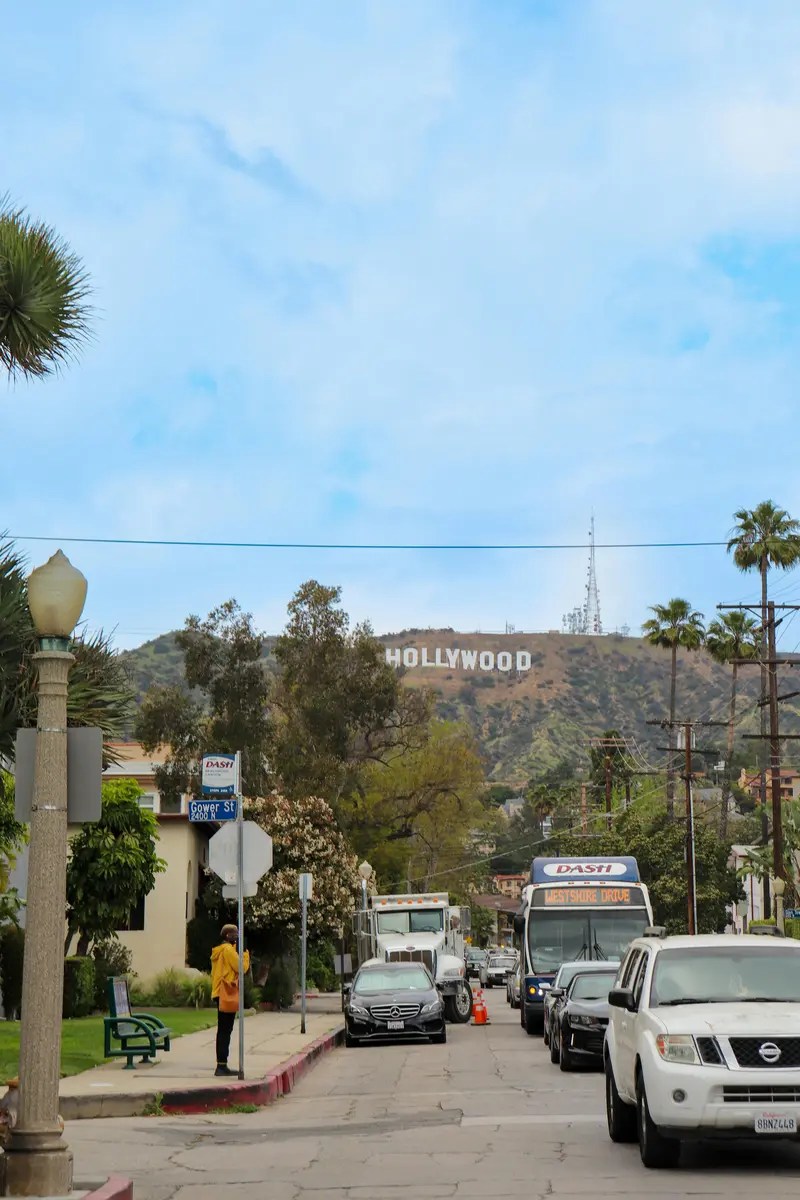
Hollywood isn’t disappearing—it’s decentralizing. The brand will survive. The sign on the hill will still draw tourists. Big premieres will still happen.
But the ecosystem that made Hollywood Hollywood—that dense, chaotic, creative cluster—is fading.
And here’s the part worth thinking about, my friend:
Efficiency is winning.
But creativity has never been about efficiency.
That tension? That’s the real story.
And depending on how it plays out, Hollywood’s next chapter might be less about where movies are made—and more about whether the soul of storytelling can survive being optimized.
Source: Fortune Apr/ May 2026 "Hollywood Ending"
Leave a Comment
Comments