When America Still Built Giants: Rudy Giuliani, Ted Turner, and the Lost Age of Confidence
There was a time when New York cleaned up its streets instead of explaining away crime, and when CNN chased the news instead of chasing outrage. Rudy Giuliani and Ted Turner were flawed, oversized personalities—but they belonged to an America that still believed bold ideas, public order, and entrepreneurial madness could build something great.
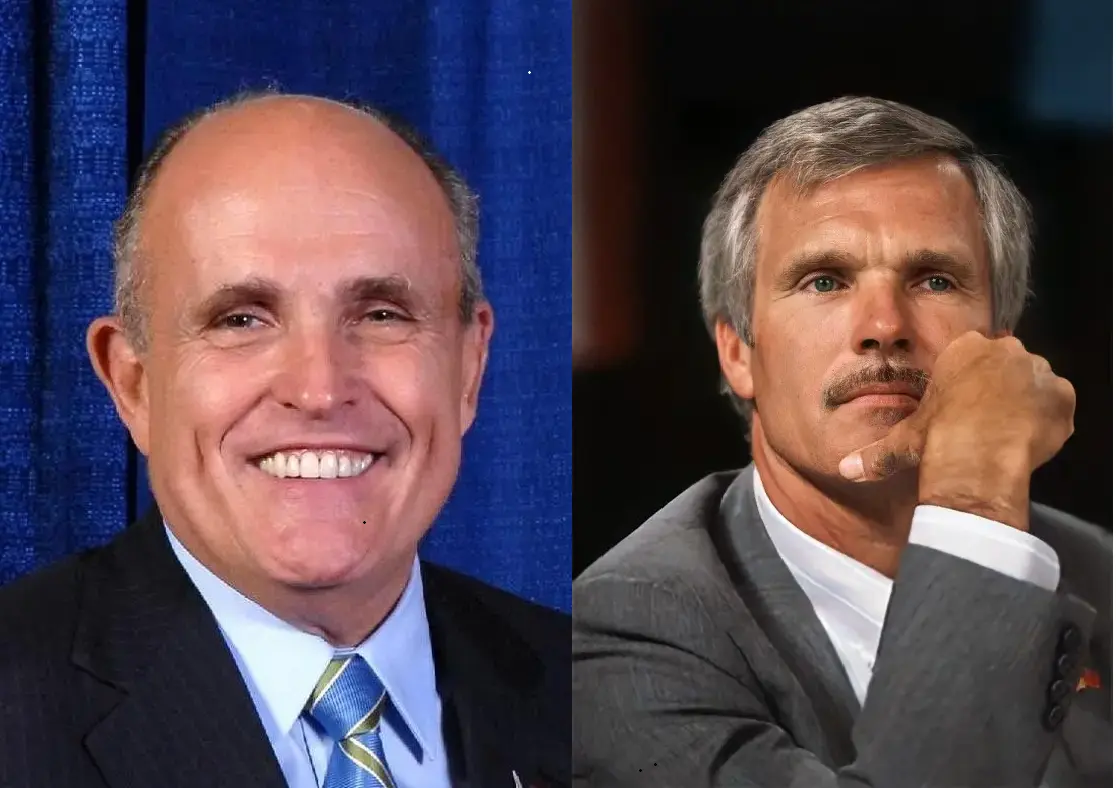
America once produced a special kind of larger-than-life figure — ambitious, unapologetic, occasionally reckless, but determined to build things that mattered.
Not influencers.
Not “content creators.”
Builders.
Reading recent Wall Street Journal reflections on Rudy Giuliani and Ted Turner feels like opening a time capsule from a different America — one that believed decline was reversible, risk was admirable, and success was something to celebrate instead of apologize for.
Both men were controversial. Both had enormous flaws. Neither would survive today’s permanently offended social-media ecosystem without being digitally burned at the stake before breakfast.
But they changed America.
And today’s America feels smaller without people like them.
Rudy Giuliani and the Resurrection of New York
It is difficult for younger generations to understand just how broken New York City once felt.
In the 1970s and early 1990s, New York was not the glamorous global capital shown in tourist ads. It was dangerous, grimy, financially strained, and psychologically exhausted. Crime was so common that people adjusted their lives around it. Car owners placed “NO RADIO” signs in their windows hoping thieves would spare them. Graffiti coated subway cars like an official city paint scheme.
Businesses fled.
Middle-class families fled.
Hope fled.
Then Rudy Giuliani arrived in 1994 with a radically unfashionable idea: civilization requires order.
Today that sounds almost revolutionary.
Giuliani rejected the fashionable theory that crime was simply an unavoidable consequence of poverty or social conditions. Instead, he and police commissioner William Bratton embraced “broken windows” policing — the idea that tolerating small disorder eventually invites larger disorder.
So New York stopped tolerating it.
Squeegee men vanished. Graffiti was cleaned. Fare evasion was punished. Police presence increased. Criminals discovered that the city no longer wished to negotiate with chaos.
And something astonishing happened.
The city came back to life.
Murders collapsed. Restaurants flourished. Broadway revived. Tourists returned. Investment poured in. Times Square transformed from an urban cautionary tale into a global entertainment district.
New York became aspirational again.
It reminded America that decline is not destiny.
That lesson now feels painfully forgotten.
Modern New York often seems governed by people who manage decay rather than confront it. Shoplifting becomes “economic anxiety.” Open-air disorder becomes “compassion.” Businesses are viewed less as wealth creators and more as tax reservoirs with legs.
The result is predictable: companies leave, investors hesitate, public trust erodes, and ordinary citizens quietly lower their expectations.
A civilization begins declining the moment it starts treating dysfunction as normal.
Giuliani’s great contribution was psychological as much as political: he restored the idea that standards matter.
Ted Turner and the America That Still Dreamed Wildly
If Giuliani represented civic confidence, Ted Turner represented entrepreneurial insanity in its most glorious form.
And thank goodness for that.
Imagine pitching CNN in 1980:
“Hello investors, I would like to create a television channel that broadcasts news 24 hours a day.”
Most sane people would have recommended immediate medical evaluation.
Ted Turner did it anyway.
This was the magic of old America: occasionally a sufficiently stubborn madman could force the future into existence.
Turner bought old MGM movies because he believed people would still watch classics. He turned the Atlanta Braves into a national brand. He gambled constantly, flirted with bankruptcy repeatedly, and somehow kept charging forward with the confidence of a riverboat gambler who had swallowed a motivational seminar whole.
And when the Gulf War began in 1991, CNN became indispensable.
People didn’t say, “Turn on the television.”
They said:
“Put on CNN.”
That sentence alone captures the level of trust the network once commanded.
CNN reporters were respected because viewers believed they were trying to inform rather than manipulate them. The news felt serious. Anchors were not performing outrage theater for social media clips every seven minutes.
Today many Americans no longer trust traditional media institutions at all. They turn instead to YouTube personalities, podcasters, TikTok clips, independent journalists, X posts, and livestreamers standing in the middle of chaos with a smartphone.
Some of this democratization is healthy.
Some of it is deeply dangerous.
But it happened for a reason: institutional credibility collapsed.
And once trust disappears, it is incredibly difficult to rebuild.
The Bigger Loss: American Optimism
What ties Giuliani and Turner together is not politics.
It is energy.
Both men belonged to an America that still possessed tremendous confidence in itself.
A country that believed cities could improve.
Businesses could expand.
Technology could create prosperity.
The future could be bigger than the present.
That optimism shaped the culture of the 1980s and 1990s. America was imperfect, certainly, but it still largely viewed itself as a civilization moving upward.
Today the national mood often feels exhausted.
Public conversation is saturated with decline narratives. Everything is “late-stage.” Every institution is supposedly collapsing. Every disagreement becomes apocalyptic. Even success is treated suspiciously, as though ambition itself were morally questionable.
You can feel the psychological difference everywhere.
Earlier generations asked:
“How do we build?”
Modern society increasingly asks:
“How do we regulate, censor, tax, restrict, or deconstruct?”
One mindset creates skyscrapers.
The other creates committees.
Flawed Men Still Build Great Eras
None of this means Giuliani or Turner were saints.
Far from it.
Ted Turner could be reckless and outrageous. Giuliani’s later years became deeply controversial and, at times, tragic. Human beings are complicated. Strong personalities often age poorly in public life.
But history should not become so obsessed with personal imperfections that it forgets actual accomplishments.
That is one of modern culture’s worst habits.
We increasingly judge historical figures not by whether they improved society, but by whether they perfectly align with current moral fashions — an impossible standard that guarantees future generations will eventually condemn everybody.
The more useful question is simpler:
Did they build something valuable?
In Giuliani’s case, New York became safer, wealthier, and more functional.
In Turner’s case, he transformed global media forever.
That matters.
A lot.
America Needs Builders Again
America does not need fewer ambitious people.
It needs better ambitious people.
People willing to restore public order without apologizing for it.
People willing to create businesses instead of merely criticizing capitalism online.
People willing to build trustworthy institutions instead of monetizing permanent outrage.
Most of all, America needs to recover the belief that decline is optional.
Because once a society loses confidence in its own future, even its wealth cannot save it.
Rudy Giuliani and Ted Turner came from an era that still believed greatness was achievable.
Perhaps the real question is whether America still does.
- When Rudy Giuliani Made New York Great Again - The Wall Street Journal, May 09, 2026
- Is America still making Ted Turners? - The Wall Street Journal, May 09, 2026
Leave a Comment
Comments