AI Will Not Kill Religion — It Will Expose It
Artificial intelligence is not replacing God, churches, or religion. It is doing something far more unsettling — exposing how much of modern belief is built on repetition, authority, emotional reassurance, and institutional control. As millions begin asking AI questions once reserved for priests, pastors, and philosophers, a deeper crisis is emerging: not whether machines can believe, but whether humans truly know what they believe anymore.
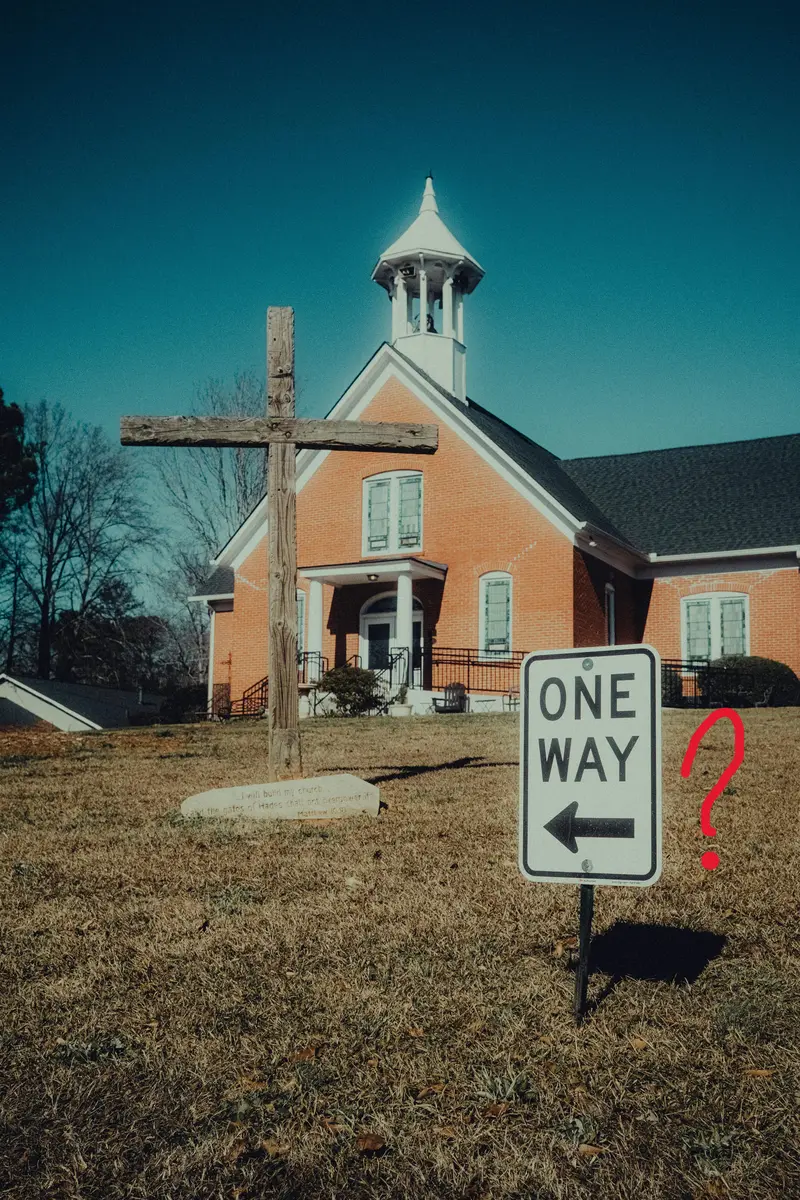
For thousands of years, human beings asked priests, prophets, philosophers, and mystics the biggest questions imaginable.
Why are we here?
What happens after death?
Is there a God?
What is consciousness?
What is salvation?
What is the soul?
Now people ask artificial intelligence.
At first this sounds absurd, even offensive. Yet quietly, almost invisibly, it is already happening everywhere. Teenagers ask chatbots about anxiety and meaning. Lonely adults discuss grief with AI companions at two in the morning. Spiritual seekers ask language models to explain scripture, compare religions, interpret dreams, and summarize centuries of theology in seconds.
The strange thing is not that AI has entered religion.
The strange thing is how naturally it entered.
And that should make religious institutions nervous — not because AI will destroy religion, but because it may expose it.
AI Is Becoming Humanity’s New Interpreter
One reason artificial intelligence feels spiritually powerful is simple: it can synthesize enormous amounts of human thought almost instantly.
A priest may spend decades studying theology. An AI system can retrieve references from Thomas Aquinas, Saint Augustine, the Bible, Buddhist texts, Gnostic writings, Jewish mysticism, Islamic philosophy, and modern psychology within seconds.
For younger generations raised online, this feels natural. Why wait for a sermon next Sunday when answers are available immediately, personally, and conversationally?
That is the real revolution.
Not information.
Interpretation.
For centuries, religious institutions controlled interpretation. They determined which meanings were acceptable and which were heresy. They acted as gatekeepers between ordinary people and sacred truth.
Artificial intelligence weakens that monopoly.
A person can now ask:
-
What did early Christians believe before the Church became institutionalized?
-
Why do different religions describe similar mystical experiences?
-
Did Jesus speak symbolically or literally?
-
Are heaven and hell psychological states?
-
What did forgotten sects believe?
-
Why do mystics across cultures describe consciousness in similar ways?
And AI will answer without outrage, hierarchy, or excommunication.
That alone changes the balance of power.
The Machine Does Not Search for Truth
There is however a deeper problem that few people are discussing.
AI does not search for truth.
It searches for patterns.
That distinction matters enormously.
When people ask religious questions, AI often reproduces what is most widely accepted, most frequently repeated, or most institutionally reinforced. It reflects consensus more than revelation.
In other words, AI may accidentally expose something uncomfortable:
much of organized religion itself operates through repeated consensus.
This is why alternative interpretations remain fascinating.
Mystics like Neville Goddard offered radically different readings of scripture. He claimed biblical figures represented states of consciousness rather than historical personalities. To traditional clergy, such interpretations sound dangerous, even blasphemous. Yet millions found them psychologically compelling because they transformed scripture from external history into internal experience.
AI systems today rarely prioritize these minority interpretations. They tend to reinforce dominant frameworks because dominant frameworks occupy more data, more citations, more institutions, and more repetition online.
So while AI appears intelligent, it often mirrors collective agreement rather than independent understanding.
That may become one of the defining spiritual discoveries of the AI age.
Churches Fear Irrelevance More Than Heresy
Religious institutions publicly warn about AI, but beneath the warnings lies something more practical: fear of irrelevance.
A chatbot is available twenty-four hours a day.
It never becomes impatient.
It never judges appearances.
It never rushes the conversation.
It speaks in personalized language.
It explains complex ideas instantly.
For someone lonely, isolated, depressed, spiritually confused, or intimidated by institutions, that becomes extremely attractive.
And modern society is producing unprecedented loneliness.
In previous generations, people often turned to churches not only for worship but for community, friendship, identity, guidance, and emotional support. Today many people live digitally fragmented lives with weak social bonds and declining trust in institutions.
AI arrives at precisely this moment.
That timing is not trivial.
The danger is not that people will literally worship machines. The danger is subtler: AI may become humanity’s primary emotional and philosophical companion.
The new confessional booth may not be inside a church.
It may be a glowing screen.
Religion Has Survived Empires. But This Is Different.
Some clergy correctly point out that religion has survived every historical catastrophe imaginable.
Empires collapsed.
Plagues devastated civilizations.
Totalitarian regimes attempted eradication.
Wars shattered nations.
Religion endured.
Artificial intelligence is not another Roman Empire or another political ideology. It represents something historically different: competition in meaning-making itself.
For the first time, millions of people may seek personalized explanations of morality, suffering, identity, death, and spirituality from a non-human intelligence trained on humanity’s accumulated knowledge.
That is unprecedented.
Yet AI also has limits that may ultimately preserve religion.
A machine can summarize theology, but it cannot experience transcendence.
It cannot mourn at a funeral.
It cannot sit beside a dying parent.
It cannot feel guilt, awe, love, despair, gratitude, or forgiveness.
It cannot participate in genuine human community.
It can simulate empathy without possessing consciousness.
And perhaps that limitation matters more than all its intelligence.
The Future Spiritual Crisis
The real spiritual crisis of the future may not be atheism versus religion.
It may be authenticity versus reassurance.
Modern systems increasingly reward emotional comfort over difficult truth. Social media algorithms do it. Political media does it. Influencers do it. Artificial intelligence may become the most powerful reassurance machine ever created.
Ask it almost anything and it responds calmly, patiently, supportively, and without emotional risk.
Humans are deeply vulnerable to this.
Especially lonely humans.
Especially frightened humans.
Especially people searching for meaning.
There is a profound difference between hearing comforting language and encountering truth. One soothes anxiety. The other transforms a person.
The danger is that AI may become spiritually satisfying without being spiritually real.
The Question AI Cannot Answer
One day AI may explain every major religious tradition better than most clergy. It may summarize philosophy more clearly than professors and interpret scripture more quickly than scholars.
Yet the biggest questions will remain untouched.
Does God exist?
Is consciousness more than biology?
Is there life after death?
What are we really?
Artificial intelligence can rearrange humanity’s existing answers. It cannot confirm which answer is true.
At least not yet.
And perhaps that is the irony hidden beneath all the fear.
AI will not destroy religion because religion was never merely about information. Human beings do not gather in churches, temples, mosques, or synagogues simply to download data. They gather because they are mortal creatures searching for meaning together.
No machine has solved mortality.
No algorithm has solved suffering.
No chatbot has conquered death.
But AI may still expose something civilization has avoided confronting for a very long time:
how much of modern belief — religious or secular — rests not on certainty, but on repetition, authority, emotional need, and the human fear of being alone in the universe.
Source:
Does an LLM Hear Your Prayers? - By Mary Julia Koch, Wall Street Journal , 15 May 2026
Leave a Comment
Comments