Borrowed Dreams: The Dangerous Rise of Leveraged Speculation Among Retail Investors
As retail investors increasingly borrow money to chase spectacular gains in leveraged single-stock ETFs, a troubling question arises: Are investors building wealth, or merely gambling with borrowed money? History repeatedly shows that when greed and fear of missing out overpower caution, financial euphoria can quickly turn into devastating losses.
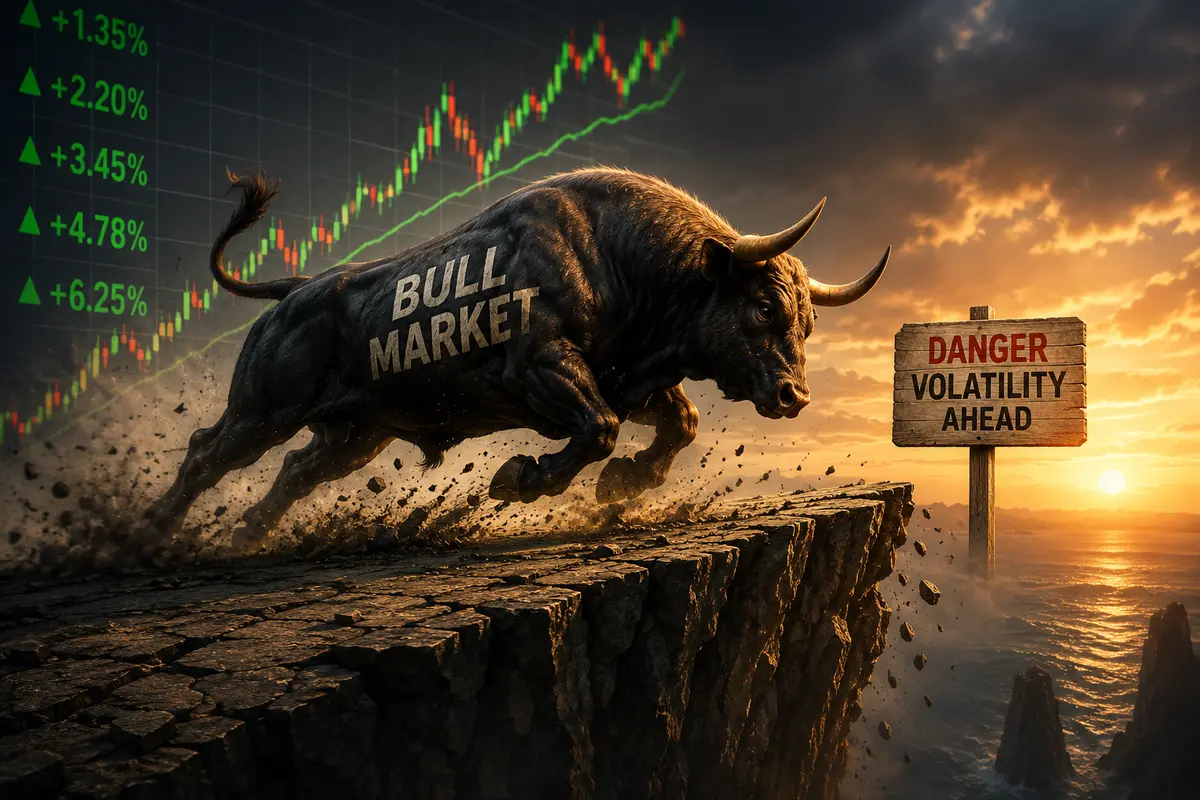
"The stock market is a device for transferring money from the impatient to the patient." - Warren Buffet
"The essence of investment management is the management of risks, not the management of returns." - Benjamin Graham
When Investing Begins to Resemble Gambling
Financial markets periodically experience moments when caution gives way to euphoria. We may be witnessing one such moment today.
Recent reports suggest that a growing number of retail investors are borrowing heavily through margin accounts to invest in highly speculative products, including leveraged single-stock exchange-traded funds (ETFs) that amplify gains—and losses—by two or even three times.
What makes this trend especially troubling is not merely the amount of money involved, but the psychology driving it: greed, fear of missing out (FOMO), and the seductive belief that markets only move upward.
For many participants, investing has gradually morphed from a disciplined process of wealth creation into something resembling gambling.
The Powerful Grip of FOMO
The promise is irresistible. Social media influencers display extraordinary returns. Online forums celebrate overnight fortunes. Brokerage apps make borrowing effortless, often requiring little more than a few clicks.
In such an environment, prudent investors can feel left behind while others appear to be getting rich at astonishing speed.
The fear of missing out can be a powerful force. Investors who would normally act cautiously may begin taking risks simply because everyone around them appears to be profiting.
Yet markets have always punished the belief that easy money exists.
The Double-Edged Sword of Leverage
Leverage magnifies outcomes.
A stock that falls by 20% may inflict a 40% or 60% loss on a leveraged product. When borrowed funds are involved, losses can exceed the investor's original capital. Margin calls can force investors to liquidate positions at precisely the worst possible moment, transforming temporary setbacks into permanent financial damage.
The danger is particularly acute for retail investors, many of whom have never experienced a prolonged bear market. Years of rising markets and abundant liquidity may have created the illusion that stocks inevitably recover quickly.
Unfortunately, markets do not always cooperate.
Lessons from Financial History
Speculative booms rarely end gently.
During the late 1990s dot-com bubble, countless investors borrowed money to purchase technology stocks under the assumption that a new era had arrived. When the bubble burst, fortunes evaporated.
The housing boom preceding the 2008 global financial crisis followed a remarkably similar pattern. Excessive leverage, misplaced confidence, and the widespread assumption that asset prices could only rise ultimately triggered one of the most severe financial crises in modern history.
The instruments change. Human behavior does not.
A Warning from Margin Call
The 2011 film Margin Call offers a sobering illustration of what can happen when leverage spirals out of control.
The movie follows employees at a major investment bank who discover that the firm's highly leveraged positions could wipe out the company if markets decline only modestly. As panic spreads through senior management, the institution desperately attempts to unload its risky assets before the broader market realizes the danger.
Although the film focuses on Wall Street institutions rather than individual investors, its central lesson applies equally to retail speculation: leverage creates the illusion of prosperity during good times, but it can rapidly destroy wealth when conditions reverse.
When investors borrow heavily, they are not merely magnifying profits—they are magnifying mistakes.
Are Leveraged Single-Stock ETFs Suitable for Most Investors?
The current enthusiasm surrounding leveraged single-stock ETFs deserves careful scrutiny.
Unlike broad-market index funds designed for long-term wealth accumulation, these products are primarily short-term trading instruments intended for sophisticated market participants who fully understand their risks.
Holding them for extended periods while simultaneously using borrowed money introduces multiple layers of volatility and complexity that many individual investors may not fully appreciate.
There is nothing inherently wrong with taking calculated risks. Capital markets reward entrepreneurship, innovation, and informed investment decisions.
Risk itself is not the enemy; reckless leverage is.
The Boring Path Often Wins
Sound investing has rarely been exciting.
Diversification, regular contributions, patience, and a long-term perspective seldom make headlines, yet they have historically proven to be the most reliable path to financial security.
For most households, investment portfolios represent years—sometimes decades—of hard work and sacrifice. Retirement savings, children's education funds, and emergency reserves should not become chips placed on a speculative roulette wheel.
Financial history teaches a simple but enduring lesson: wealth built gradually tends to endure, while wealth pursued recklessly often disappears just as quickly as it arrived.
A Final Thought
Markets will always offer another opportunity.
Lost life savings, however, are far harder to recover.
In the pursuit of financial success, investors would do well to remember that preserving capital is every bit as important as growing it.
Sources:
1. Debt Binge Drives Stocks Into Risky Territory - By Pitcher from The Wall Street Journal dated 29 June 2026
Leave a Comment
Comments