The Art of Timing: Why Strikes Happen When Society Needs Workers Most
When transit operators strike during exam season, teachers walk out during the school year, postal workers disrupt Christmas deliveries, and stadium workers threaten a walkout before a major sporting event, many people ask the same question: Why now? The answer lies in the economics of bargaining power. A strike that causes little disruption has little leverage. But while strategic timing may help workers win concessions, it also raises difficult questions about the costs imposed on the public.
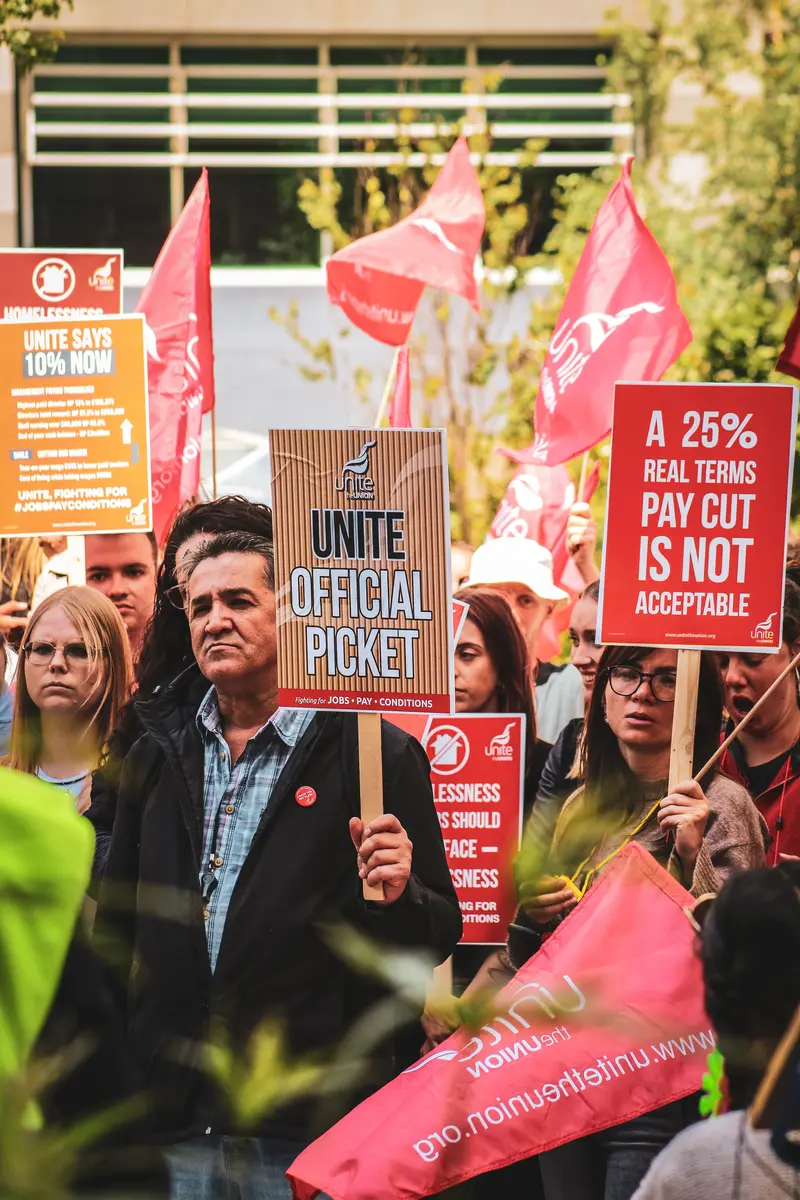
News reports recently highlighted the possibility of a strike by stadium workers in Los Angeles just days before World Cup events are scheduled to begin. Whether one agrees with the workers' demands or not, the timing raises an interesting question that applies far beyond sports venues:
Why do unions so often choose moments when their services are needed the most?
The answer is surprisingly simple. A strike is not merely a work stoppage. It is a negotiating tool. Like any tool, its effectiveness depends on how and when it is used.
Why Timing Matters
Imagine a transit union announcing a strike during a week when schools are closed and commuters are on vacation. The disruption would be limited. Public pressure on city officials would be lower. Management could afford to wait longer before making concessions.
Now imagine the same strike occurring during final examinations for colleges and universities, when thousands of students depend on public transportation. Suddenly the pressure on elected officials and employers increases dramatically.
The same logic applies to many labor disputes. The effectiveness of a strike often depends less on the number of workers involved and more on the consequences of their absence.
Examples We See Again and Again
Teachers' unions often negotiate during the academic year when classes are in session. Postal workers frequently find themselves in labor disputes during the busy holiday shipping season. Sanitation workers have greater leverage when garbage accumulates quickly in warm weather. Airport workers, railway employees, and port workers all understand that timing can be as important as numbers.
The recent Los Angeles stadium workers' dispute follows the same pattern. Major sporting events bring enormous public attention and financial stakes, making them ideal moments to maximize bargaining power.
The Union's Perspective
From the union's perspective, this strategy is entirely rational.
Workers generally possess fewer financial resources than governments or large corporations. Their principal source of leverage is the ability to withhold labor. If that withdrawal causes minimal inconvenience, employers may feel little urgency to negotiate.
Many labor leaders would argue that strategic timing is not a flaw in the system but a necessary feature of collective bargaining. Without meaningful leverage, negotiations can easily become one-sided.
Supporters also point out that many workplace protections, wage increases, pensions, and safety standards were won through collective bargaining backed by the threat of strikes.
The Public's Perspective
Critics see a different side.
They argue that the real victims are often neither management nor union leadership but ordinary citizens. Students miss classes. Patients miss appointments. Small businesses lose customers. Families experience delays and uncertainty.
In some cases, the public begins to feel like a bargaining chip in a dispute between two organized groups.
This frustration often grows when the affected service is considered essential to daily life.
An Ethical Question
This creates a difficult question.
If a strike is timed to maximize disruption, does it unfairly burden the public? Or is public inconvenience simply the unavoidable mechanism that gives workers meaningful bargaining power?
A strike that inconveniences nobody is unlikely to succeed. Yet a strike that causes widespread hardship risks eroding public support for the workers' cause.
The tension between these realities explains why labor disputes generate such passionate debate.
Finding the Right Balance
Most people support fair wages and decent working conditions. At the same time, they depend on essential services that keep modern society functioning.
The challenge for any democratic society is finding a balance between these competing interests. Workers must have enough leverage to negotiate fairly. The public must be protected from excessive disruption. Employers must remain financially viable.
As long as those three goals remain in tension, one thing is certain: strikes will continue to occur not when workers are least needed, but when they are needed most.
That is not an accident. It is the very source of their power.
Sources:
1. L.A. Stadium Workers Vote to Strike Days Before World Cup - By Paul Kiernan in The Wall Street Journal dated June 08, 2026
Leave a Comment
Comments